



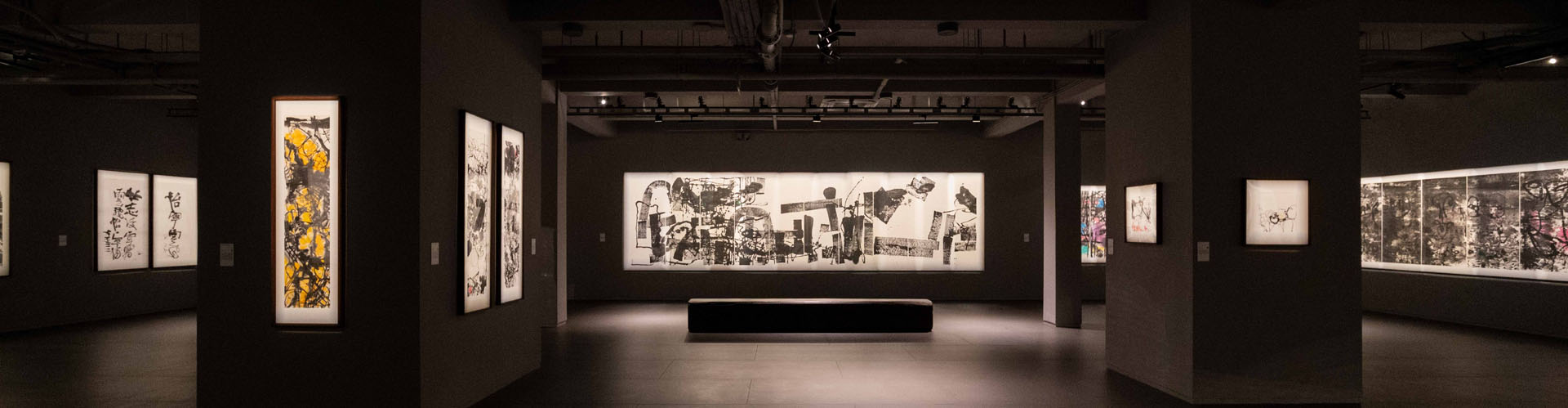
Andong Art Discourse | Interpretation of Andong Calligraphic Imagery Art Series (I) — Zhuque Ge Yi Chi Zhen Tian (The Vermilion Bird in Hemp Robes, a Crimson Treasure Against the Sky)
Editor's Note
We focus on "Andong Calligraphic Imagery" — a form of creation born from the transformation of Chinese character forms. It is reborn through deconstruction and reconstruction, existing between writing and imagery, traversing millennia of cultural context through ink and lines. This avant-garde experiment, which is "neither pure calligraphy nor mere painting, yet both calligraphy and painting," not only questions the origins of calligraphy but also opens an expressive pathway for contemporary art that is culturally rooted and transcends boundaries. Through a series of interpretive essays, we aim to make each discourse on "Calligraphic Imagery" an opportunity for growth. We anticipate this freely evolving space will become an experimental ground for interpretation. True heritage is never about replicating the past; rather, it enables people of each era to use their own language to rewrite, through new constructions, the "Journey of Beauty" belonging to their time.
Painting Analysis
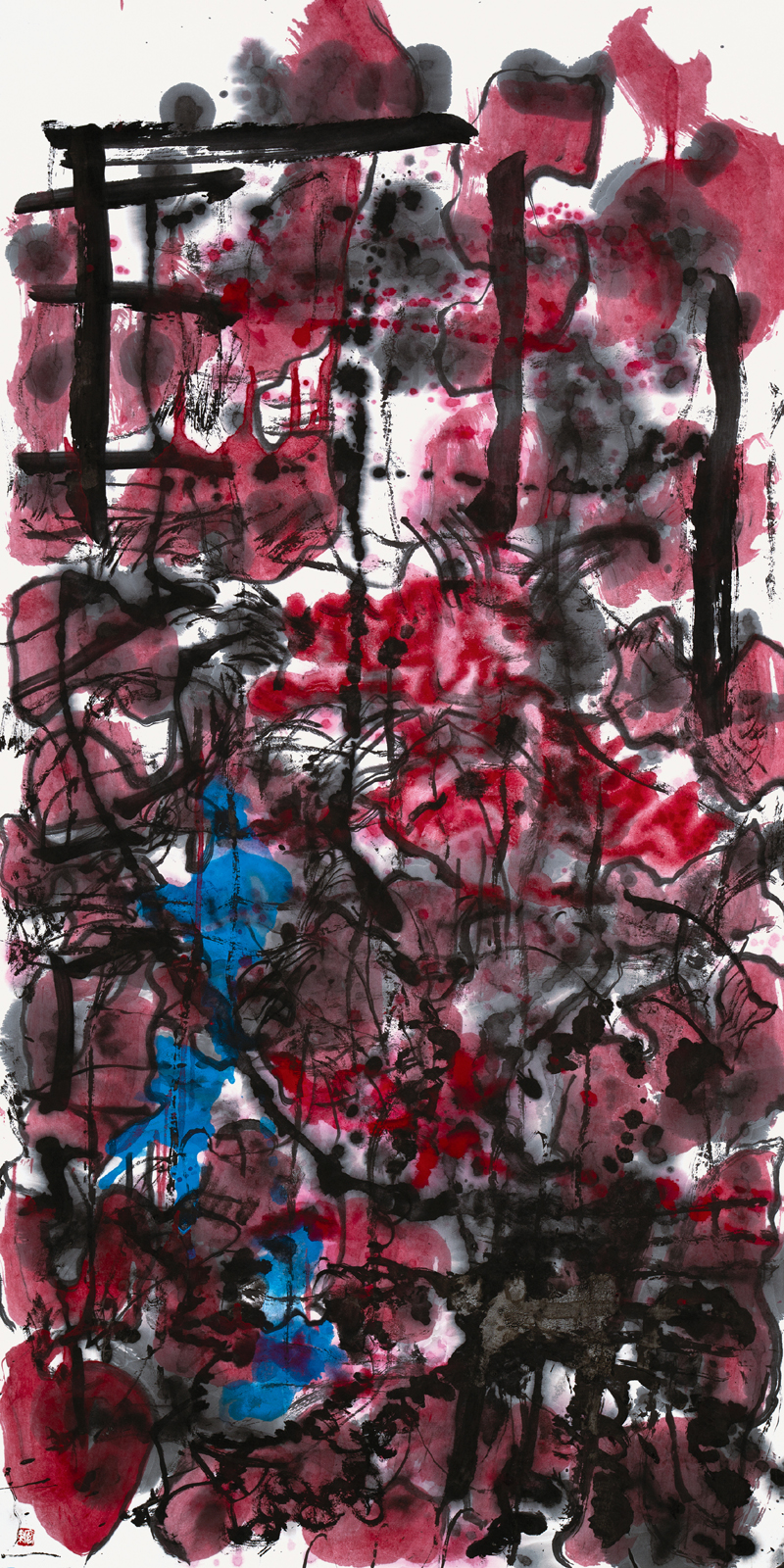
In this work, what we encounter is a will that has broken free from the constraints of physical representation. Stemming from the artist's insight and mastery over the expressive power of color and line, the inner turbulence and the very essence of life are structurally unfolded and solidified within the confines of the canvas. At this moment, colors and lines, the composition, and all other elements of the painting seem propelled by another force, making you, the viewer, feel like a witness to a marvelous birth. In this moment of detachment, a new space emerges between subject and object, a tension not entirely filled by the creator but instead largely entrusted to the viewer.
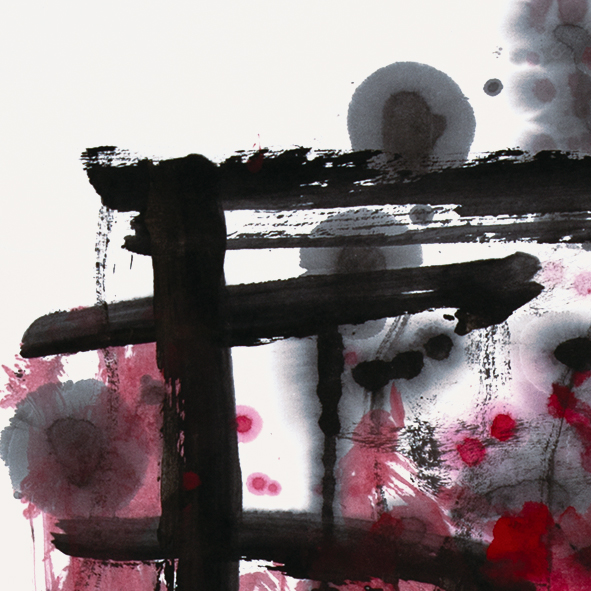
Detail (I)
In this detail of the painting, the most captivating aspect lies in the uninhibited use of color. This is by no means a mere application of hues to depict ordinary objects, but rather a vivid elegy of life expressed through bold and intense strokes: profound, night-like masses of black starkly confront a dazzling, resplendent brilliance; a fervent, rolling intensity akin to molten lava intertwines with the refreshing coolness of blue-green tones.
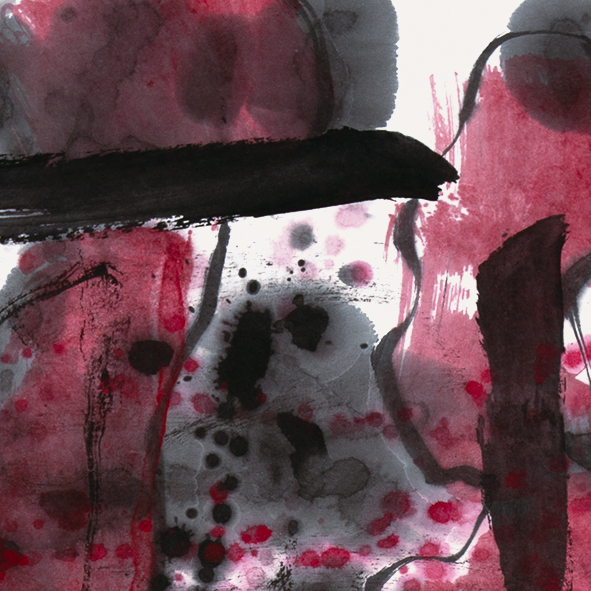
Detail (II)
The fusion of ink and color does not descend into chaos; instead, it builds a peculiar strength through conflict — akin to rich, black earth forming a deep and mellow foundation for the painting, while the vibrant pink resembles an unextinguished flame from the depths of the soul. The pulsation between color and ink also reflects the artist's continuous process of ascent and return.
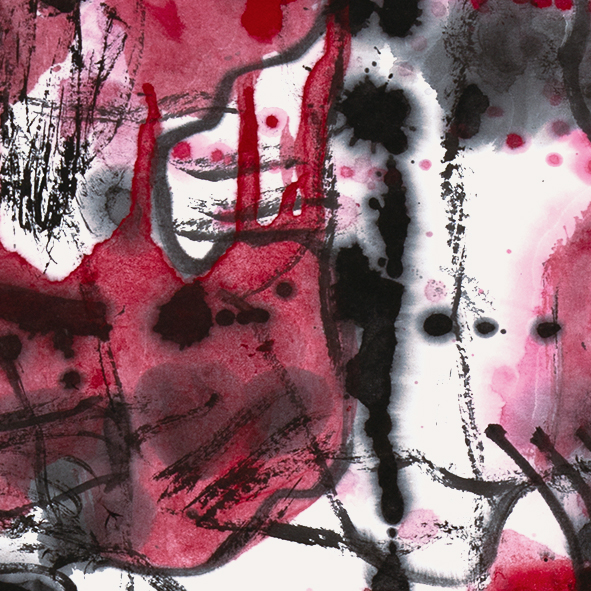
Detail (III)
When we contemplate the trajectories of the lines, we witness the artist transforming into their own "grammar." Lines break free from the shackles of form, becoming independent "vocabulary" — whether flowing like blue streams, striking down like black cuts, or manifesting as various engraved symbols — all emerging as integral facets of the whole.
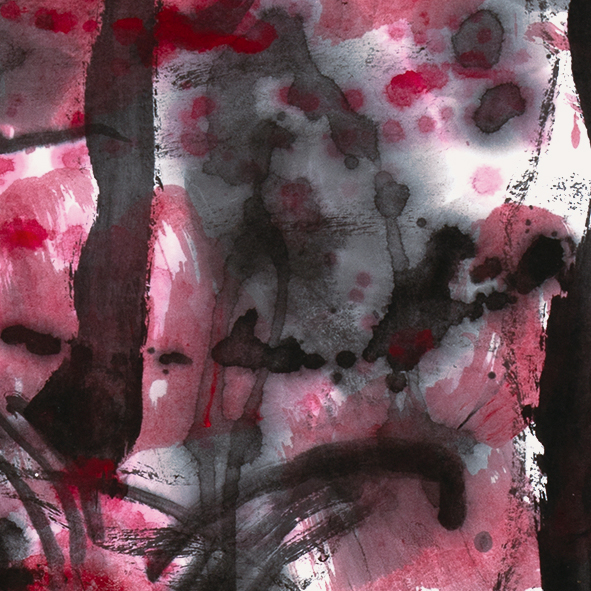
Detail (IV)
These seemingly heaven-sent, casually rendered lines all point to the subtleties of mind and spirit. They intertwine, entangle, and surge forth, quietly constructing forms within the void and the burgeoning vitality of plants. Like raging flames or profound silence, they quietly build the ceaseless cycle of life within a metaphysical realm.
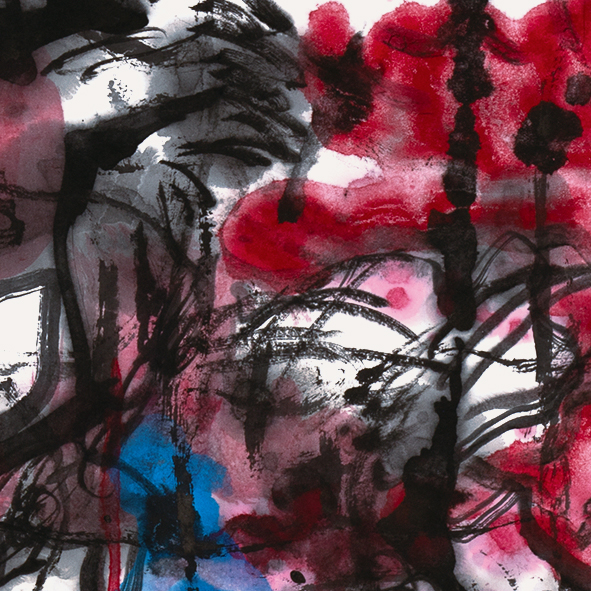
Detail (V)
The composition of the painting also demonstrates a profound understanding of rhythm and breath. The gathering and dispersion of elements across the canvas is deliberate: in the lower left corner, dense black and fiery orange intertwine and surge like molten lava, forming a dense, heavy visual vortex brimming with complex and potent inner energy; the upper right corner, in contrast, uses blank space to create an ethereal realm, accompanied by a few sparse, lively, and ethereal lines drifting within a clear and lucid space.
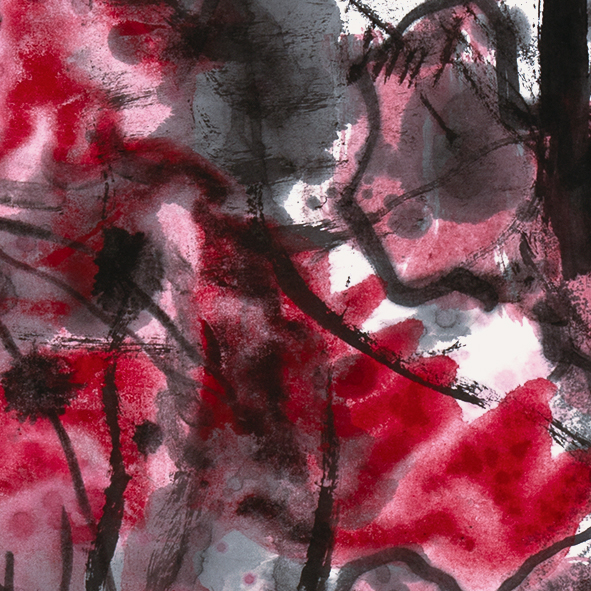
Detail (VI)
This interplay of density and sparseness, solidity and void, is not merely a visual rhythm but a cadence of spiritual tension and release. The viewer's gaze is guided by an intangible force: it may follow the blue-green threads as they glide gracefully across the sky, traverse the gentle maze of pink, and plunge into the core area engaged in struggle with black; or it may linger over the tangled lines and color blocks at the bottom of the painting.
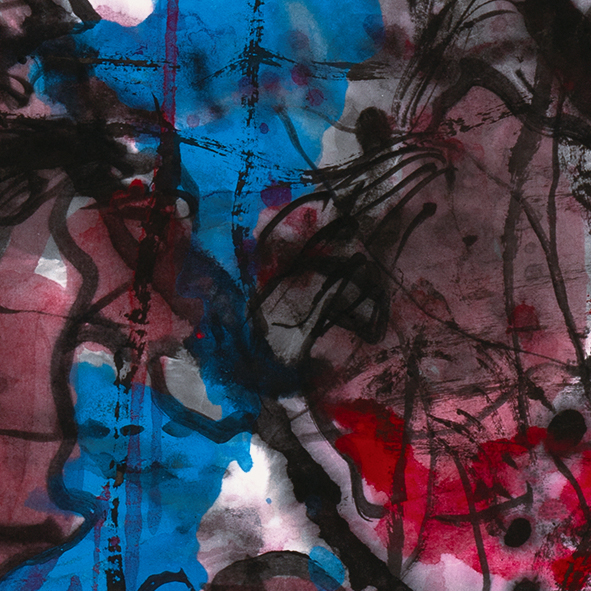
Detail (VII)
Colors and ink blocks may not necessarily be the result of the artist's rational planning. They autonomously engage and interlock within a certain range, and the subsequent multitude of metaphors and interpretations may diverge from this original moment of creation. Concepts such as memory or searing intensity all belong to the invisible magic of art.
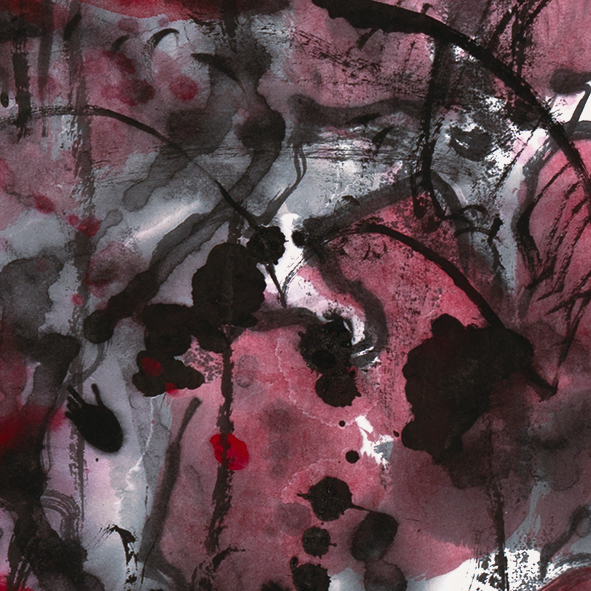
Detail (VIII)
The freely flowing "lines of vitality" and the resolutely striking "traces of strength" serve as concrete manifestations of the unrestrained surge of inner spirit and a resilient will.
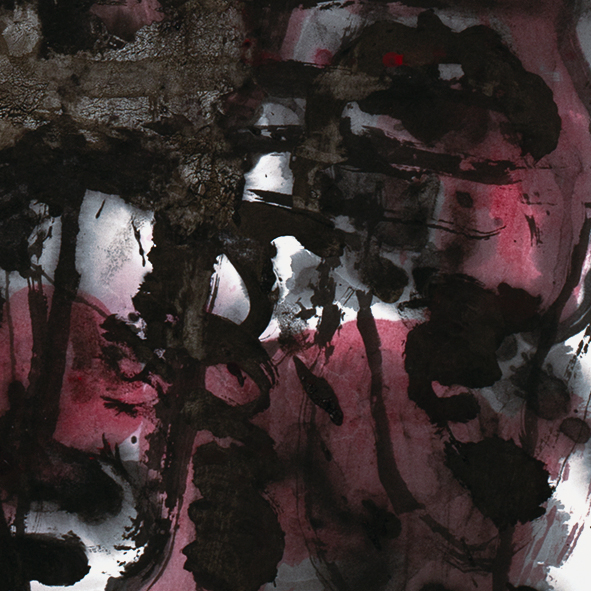
Detail (IX)
The exploration of beauty progresses from physical forms directly to the participation of heart and mind, collectively completing the presentation of art. Physical perception outweighs rationality; transcending experience, creation can return to resonate with primal thinking. When the body and will are cleared of superfluous impurities, the dialogue between individual experience and the world arrives as expected.
As the lines passed through my hand and that flower-like yet non-flower cloud, I truly did not understand how they flowed and traversed, nor how they came into my grasp. Who was in control, or who commanded my hand? It was as if an automatic mode had been activated, and my hand began to move involuntarily. As for the relationship between hand, line, flower, and cloud, it was even more beyond my control. They superimposed, iterated, flipped, and shifted, each left to its own destiny. At this moment, the original subject and object had long since receded. That once-recognizable flower had been compressed, twisted, and reconstructed, though it still vaguely resembled *a* flower. The primacy of that initial visual illusion no longer existed. Amid desolation, we repeatedly magnified it until we could no longer distinguish between primary and secondary qualities—in the end, all that mattered was that it simply looked like a flower. As for what transpired between that flower and that elusive cloud, could we ever return to the original scene? Could the flower penetrate the cloud? Could we delve into the flower to peer inside, or leap into the void to gaze down from above? Were the differences due to dimensions, roles, perspectives, or states of mind? That place is the archaeological site beneath our feet; that is the irretrievable reality.
热门推荐
更多-
2026-03-13
Exhibition Update|Andong Calligraphic Imagery Art Exhibition Unveils New Content!
read moreFollowing the widely acclaimed opening of "Tianyu Chizhen: An Dong's Calligraphic Imagery A···
-
2025-09-28
从水墨到书象,从设计到科技!珠海这场文艺沙龙聚焦青年创新力量
read more9月27日,由珠海市文学艺术界联合会主办、珠海市文艺志愿者协会承办的“新时代·青年视角——艺术与社会的对···
-
2025-07-25
开幕现场|流动的——安东书象艺术展07.18
read more开幕现场|流动的——安东书象艺术展07.18
-
2025-07-25
开幕现场|哪花我闻安东书象艺术展07.05
read more开幕现场|哪花我闻安东书象艺术展07.05